Best Neighbourhoods in Sydney, Australia: Your 2025 Guide
Published:
by Michael Ellenor

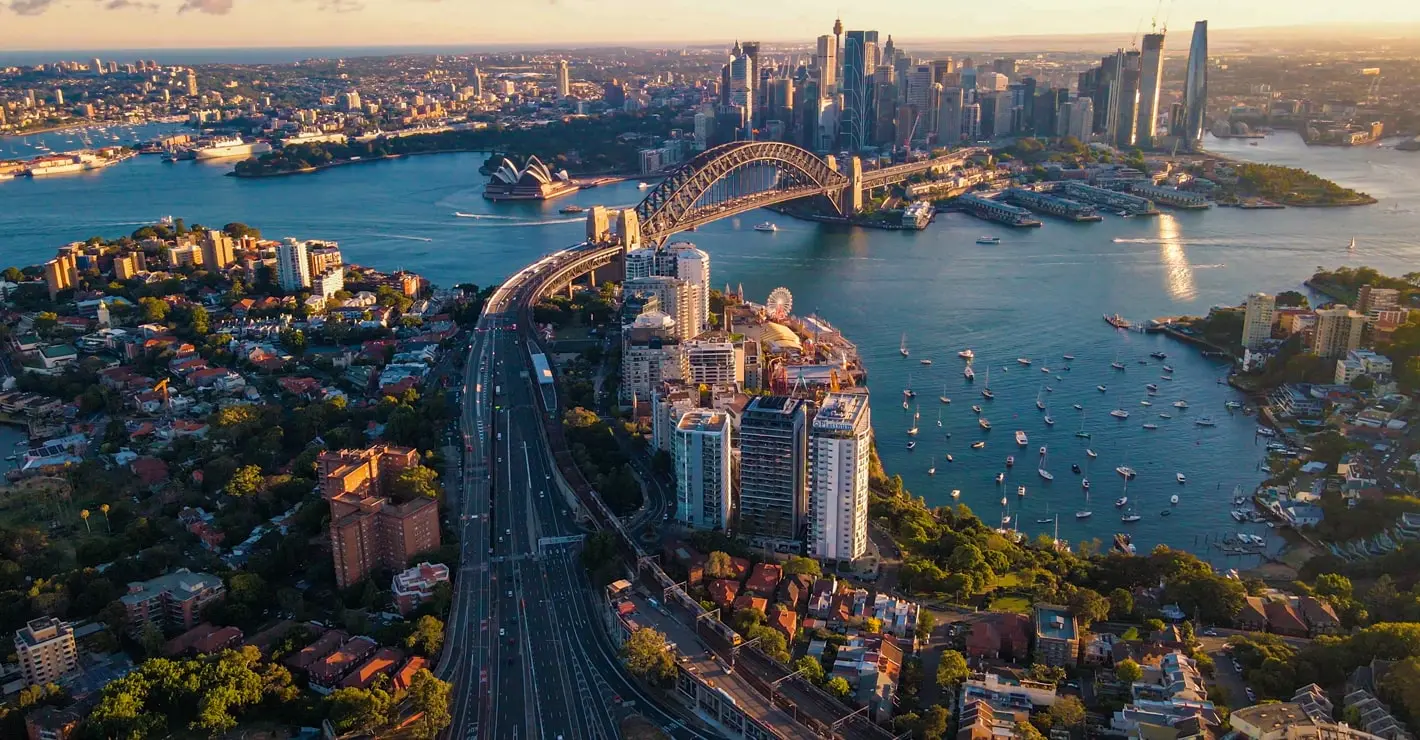
Everybody knows about Sydney’s Harbour, Opera House and vast Royal Botanic Garden in the middle of the city.
But as well as its picturesque centre, Australia’s biggest agglomeration (5 million people and counting) is a mishmash of interesting and interconnected neighbourhoods that have something for everyone.
A world-class metropolis to rival the likes of Los Angeles – albeit on a slightly smaller scale – Sydney comes with a wide range of opportunities (and challenges) that make moving to the city both incredibly exciting and nerve-racking.
Sydney is mostly a modern city. Despite a history dating back centuries, much of the Sydney you see today has only really sprung up in the last 50 years or so. Today’s skyline is packed with high rises – and it seems like the city’s outskirts nudge ever further into the Australian wilderness every year.
In this guide, we will walk you through some of the best-known neighbourhoods, including some up-and-coming areas, to help you decide where you want to settle if you are thinking of moving to the city.
Choosing the right neighbourhood for you will ensure that your relocation to Sydney will get off to the best possible start.
The criteria when assessing the best neighbourhoods in Sydney will be different for everybody. However, here are six things you’ll likely be looking at:
Sydney is generally on the safe side, but there are big differences between some of the inner and outer areas. If you’re looking for a famously low-crime spot, you can’t go wrong in the likes of Lane Cove and Wahroonga.
One person’s ‘nice posh enclave’ is another man’s ‘snooty hellhole’. Generally, though, the more you are prepared to pay for your property, the nicer the environment. But everyone’s idea of nice is different! In 2025, Sydney’s median house price was around $1.5 million, and one-bed apartments rarely go for less than $600,000 (unless they are way out of town). If you are on a budget, head west or south.
Like Los Angeles, Sydney is a big driving city. There is plenty of public transport too, but the reach of the local trains, ferries and buses is not entirely uniform. In other words, 10km away could be a 30-minute trip or more than an hour. Transport links to Parramatta are due to be improved soon.
If you have little ones, access to a good school will be high on your list of priorities. Some of the best public and private schools can be found along the upper North Shore and inner west pockets.
Sydney is seriously buzzing – but if traffic, street noise, and easy access to a wild and wonderful nightlife are not your thing, you’ll need to swot up on the suburbs. Some of the quieter ones are in the leafy north and outer west parts of town.
If you’re hoping to make a killing on your property a few years down the line, there are some up-and-coming areas with good infrastructure worth considering.
A good way to work out what kind of place will be best for you is to create what’s known as a priority matrix. List the above six categories and start giving them marks out of 10. You’ll soon get a clear idea of the kind of area you are looking for.
H2 Best suburbs for families
Here’s a quick breakdown of four popular spots – and the kind of budget you would need for a decent house or luxury apartment in each.
This safe, leafy corner of Sydney is very popular with young families and is only 15 to 30 minutes from the centre of town by bus. Check out Lane Cove Public School and Saint Ignatius’ College Riverview to get an idea of the local education options. Budget $3.3m+ for a property.
One of the absolute winners when it comes to safe places to live in Sydney, this beautiful neighbourhood is a little further out (45 minutes by train) and has leafy streets/lots of space. Budget $2.9 million.
Popular with both expats and families because of its genteel vibe, this expensive part of Sydney, 12-20 minutes away by ferry, is a highly desirable place to be. Budget $4.5m or more.
If you’re looking for some buzz without the inner-city hustle, there’s no better place to be than North Sydney, which is arguably Sydney’s best spot for work/life balance. Schools to investigate include North Sydney Boys and North Sydney Girls High Schools, and the acclaimed Shore School (boys only). Budget: $2.5m – though apartments are more common than houses.
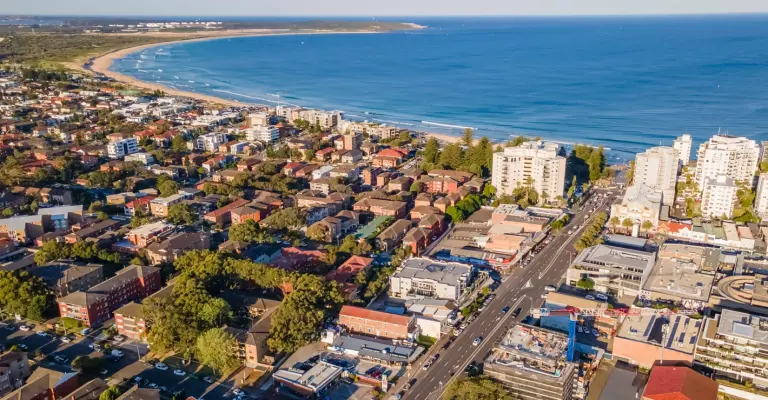
Your priorities in this case are likely to be the ease of getting to work and a large stock of single-person dwellings. Here are some of the best areas for you.
If you have a budget of $750k or more, you should be able to find a nice apartment in this lively neighbourhood, which is walkable from much of the central city. There are restaurants, cool bars, and a real sense of being in the heart of the action.
This part of town has a bustling village feel to it, even though it’s only 15 minutes by public transport from the city centre. Budget at least $900k for an apartment.
A little easier on the wallet (but not much) is this quirky district west of the city centre. It’s a pleasantly diverse place with an arty scene. Budget $800k+ for a flat.
Lots of new-build apartments to choose from here – and decent infrastructure (including bars and gyms) to support it. Budget around $800k+ for your apartment.
One of the most “bonza” (sorry) aspects of working in Sydney is that you can pick a coastal district and commute in. Everywhere in our list is doable in under an hour, unless the traffic is bad. All prices are for a house.
This famous part of town has fantastic surfing, lots of family events, and you can take a ferry into the city. Budget: $3.5m+
Even more famous than Manly, Bondi has surf, bars, lots going on and a steady influx of tourists – which may or may not be to your liking. You’ll need about $4.1 million for a nice family home here.
A little further south from Bondi and with lots to offer, this lovely little spot is a great place to be if you’re starting a family and have around $4 million to spend on a place to live.
Gentrification is sweeping through this up-and-coming resort, where $2.8 million will buy you a nice property.
Not everybody moving to Sydney is a multi-millionaire or has the credit history to borrow an eye-watering sum. If you’re looking for the Sydney lifestyle on a budget, all these places are worth checking out.
For around $1.4 million, you should be able to get to a house in this thriving part of Sydney, which is also known as the city’s second central business district. It’s multicultural, and the local park is lovely.
Not to be confused with the small town of the same name in the north of England, this suburb on the west of Sydney is your fast track to outdoor living and the Blue Mountains. Houses in the $1.2-$1.4m bracket are often listed.
Not to be confused with the football-mad city of the same name in the north of England, Liverpool is on the up and up. You’ll need at least $1m to settle here.
Fairfield and Ryde are also worth checking out as up-and-coming suburbs.
If you’re looking to rent in Sydney, you’d need between $3,000 and $5,000 a month for an apartment, and $6,000+ a month for a house, depending on area and property specifications.
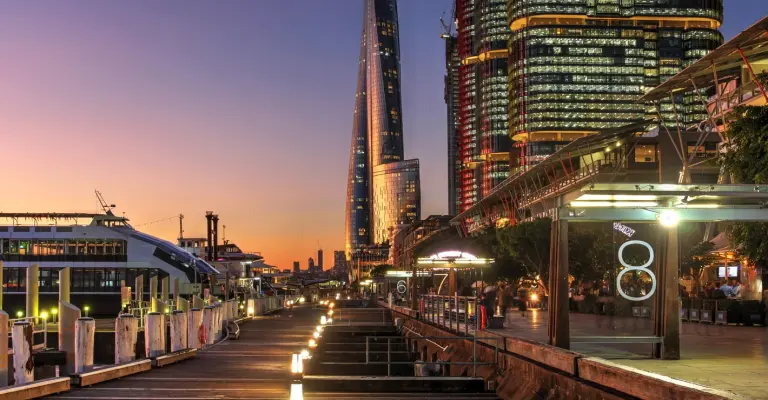
Some of the areas attracting attention as the potential next big thing include:
Summer Hill: proving popular with families that used to live in the middle of the city but are looking for a slightly slower pace of life.
Dulwich Hill: a fast-growing precinct that is noted for its creative undercurrent.
Rhodes: cool and trendy with lots of riverfront development underway.
Eastlakes: on the airport side of town and fast becoming gentrified with something of a Paddington vibe (the London suburb, not the bear).
| Suburb | Median house price | Notable schools | Public transport | Lifestyle |
|---|---|---|---|---|
| Lane Cove | $3.3m | Lane Cove Public School, St Ignatius’ College, Riverview | Buses, 15–30 minutes to CBD | Cafés, river parks, family events |
| Wahroonga | $2.9m | Abbotsleigh, Knox Grammar | Fast train – 45 minutes | Leafy, peaceful village |
| North Sydney | $2.5m | Shore, North Sydney Boys and Girls Schools | Train and Sydney Metro | Urban, walkable, great dining |
| Surry Hills | $2.3m | Bourke Street Public School | Walk, light rail | Arts, nightlife, LGBTQ+ friendly |
| Bondi | $4.1m | Wairoa School, Reddam House | Bus, 30 mins to CBD | Surf, markets, food, tourists |
| Parramatta | $1.4m | Parramatta Public School, Arthur Philip High School | Train and light rail | “Boom” city with multicultural riverside vibes |
| Marrickville | $2.1m | Marrickville Public School, Newtown High School of the Performing Arts | Train/light rail | Breweries, music venues and global eats |
| Penrith | $1m | Penrith Selective High School | Train/motorway | Blue Mountains, stadium and fairgrounds |
| Coogee | $4.2m | Coogee Public School, Marcellin College | Bus | Chilled beach vibes and coastal walks for families |
Deciding where to live in Sydney is never easy unless you already know the city inside out or have links to a particular neighbourhood. For the rest of us, the smart way to do it is to look at the pros and cons of each type of suburb. Here’s what to expect:
Family suburbs
Generally safe, with good schools and lots of space. However, the nicer the neighbourhood the higher the property price.
Inner-city hubs
You’re never far from the action, but there is also a slight risk that the new hub you’ve chosen never quite takes off. You may also need to get used to a fairly small apartment.
Western growth areas
No one in Sydney is developing further east thanks to the Pacific Ocean. So, if you’re looking for a brand-new development, you will often need to look west. There are plenty of choices, but you may have to put up with a longer commute.
Coastal suburbs
Potentially the best of both worlds with wonderful lifestyle perks, but you will pay premium prices and may get bored of tourists.
H2 How to choose the right neighbourhood for you
Here’s what we recommend. If you’re with a family, sit everyone down and ask everybody to name their priorities. The kids, too. What is everybody looking for – and how would you rank each of these things?
This will help you work out your family’s ‘must-haves’ in your new neighbourhood.
If you’re moving to Sydney on your own as a professional, we recommend checking out some of the up-and-coming new hubs that are close to the centre of the city. Choose wisely, and you’ll get access to a bustling pace of life – and your office won’t be far away. You’ll find lots of tailored accommodation for singletons and couples.
Whatever your situation, it is worth spending a good few days in the city and putting in some serious shoe leather. You want to get under the hood of all the best Sydney neighbourhoods that have taken your fancy.
Whichever one you decide on, ask if it will suit your needs not just in the next six months, but in the next few years, too.
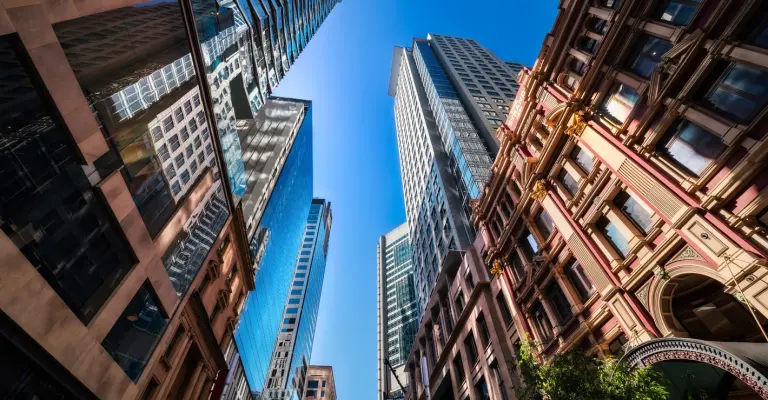
Moving to a major city like Sydney is both incredibly daunting and incredibly exciting for almost everybody who arrives. So don’t think that you’re alone if you’re experiencing sleepless nights trying to work out where the best place to set up shop is.
If you are moving from a large property in the country to somewhere more compact in the middle of the city, think about locking away your personal possessions in a self storage unit.
TITAN Containers offers self storage in Chipping Norton and Sydney that gives newcomers a fantastic amount of breathing space.
Whether you need just a small unit for a few bulky possessions or something that will take the contents of a four-bedroom house while you work out what’s next, there is a self storage unit with your name on it.
Once you’re up and running, Sydney is your oyster! And what an incredible place to be.
Ready to explore Sydney’s top suburbs? Use this guide to compare, shortlist and start your move with confidence.
Read next: The ultimate self storage guide: uses, sizes, costs & tips
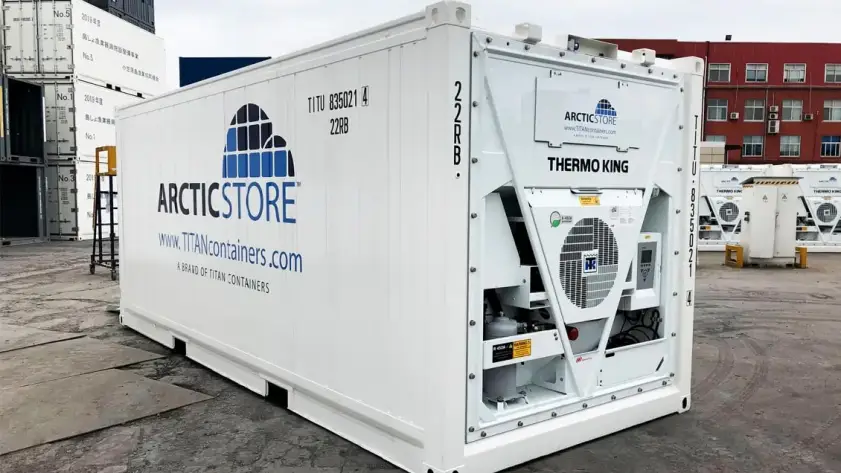
A reefer container is a powered, temperature-controlled container designed to store or transport chilled and frozen goods. This guide explains how reefer containers work, the different types available, and when they’re the right solution for cold storage needs.
Storage containers and shipping containers are often confused. This quick guide explains the key differences, standards, and what you need to know before renting or buying.
Self storage is a flexible way to keep personal belongings or business goods safe and accessible. With private, lockable units in a range of sizes, you can store and access your items on your own terms. This guide explains how self storage works, what you can store, and how to choose the right unit.